Normal
Free- Dials from the counsellor's own phone through the OS dialer.
- No AI, not transcribed — the simplest fallback.
- Always available when a number is on file.
Normal · free · OS dial · not transcribed
AVA never replaces your counsellors — it clears their day of the dead-end dialing and hands them only the leads that are warm, with the brief already written. This is that app: a phone-shaped command line for the human half of admissions, built for the counsellor on the floor, on weak signal, in nine languages.
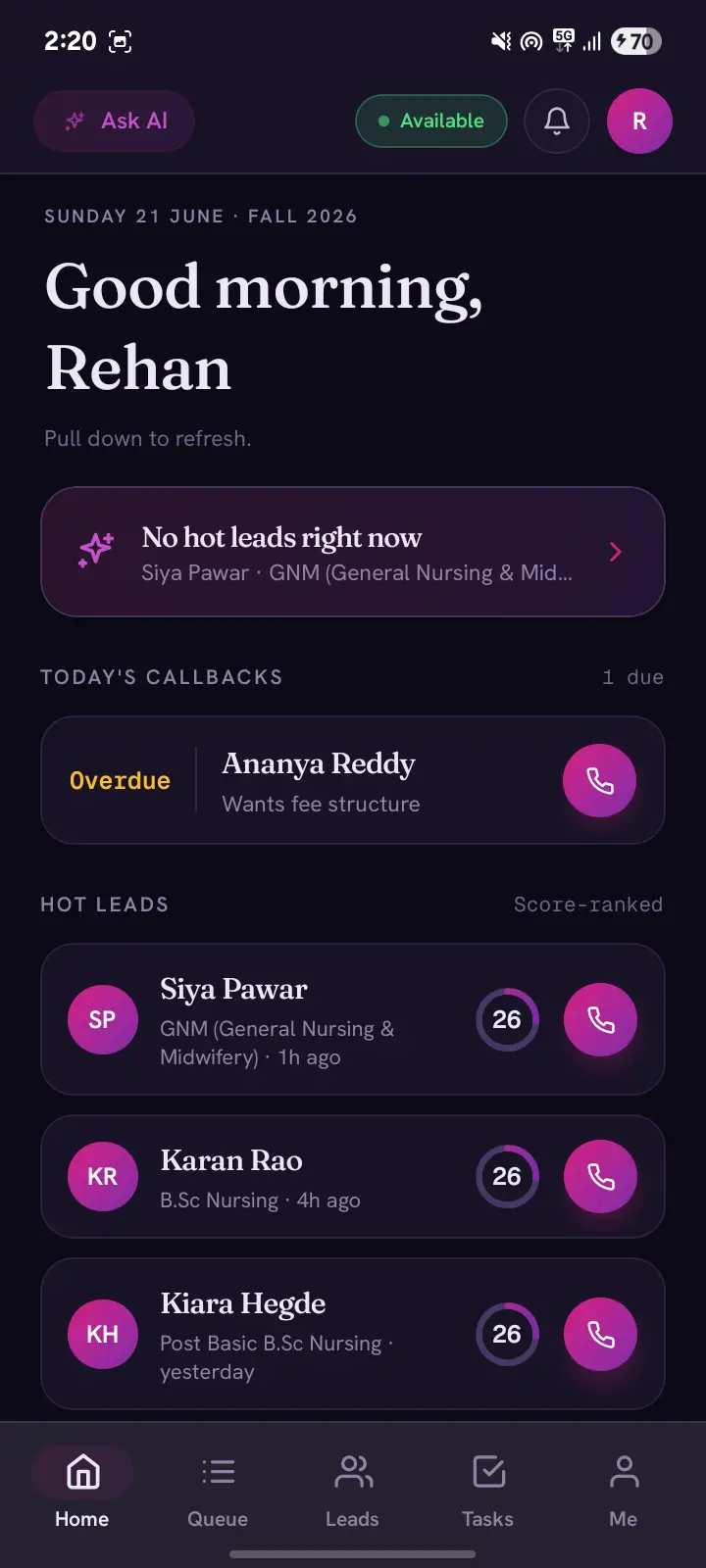
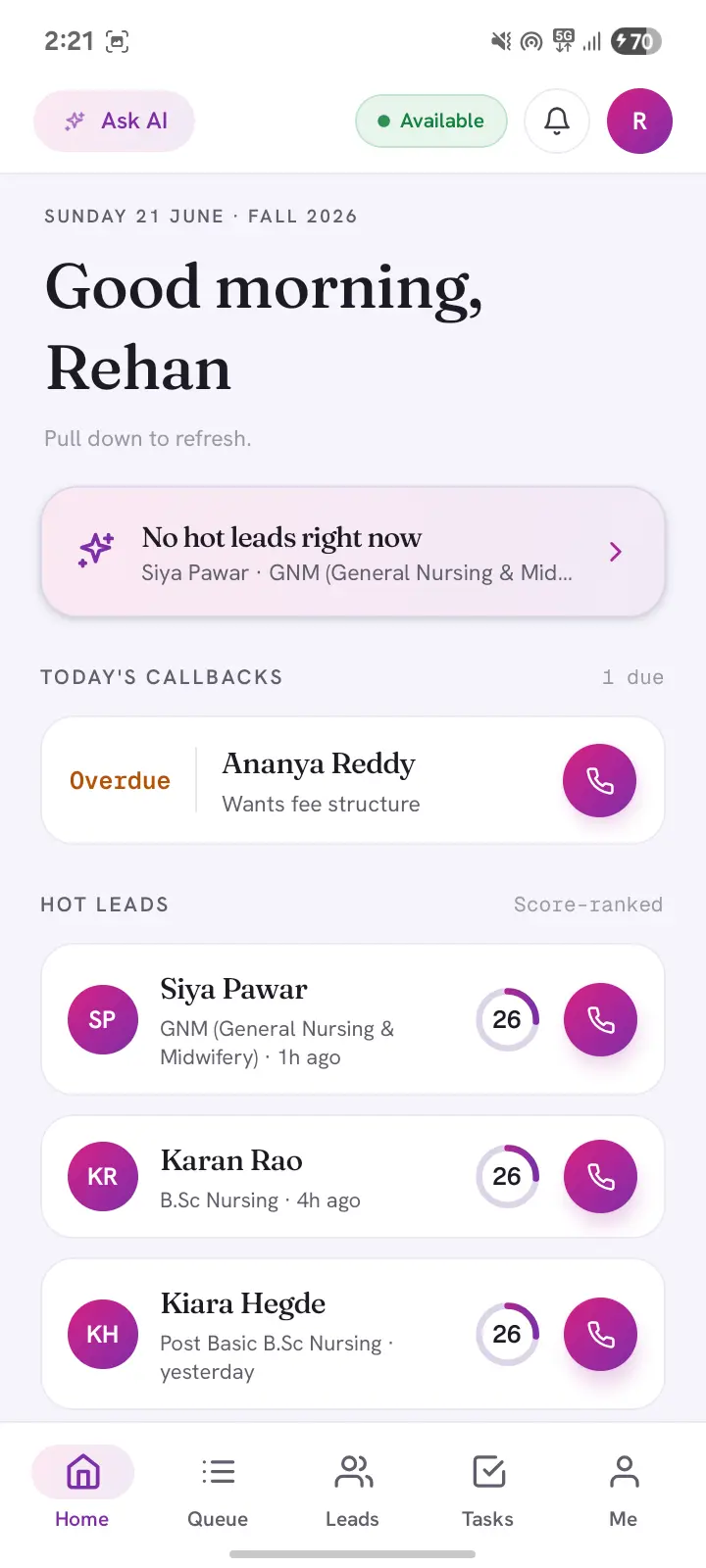
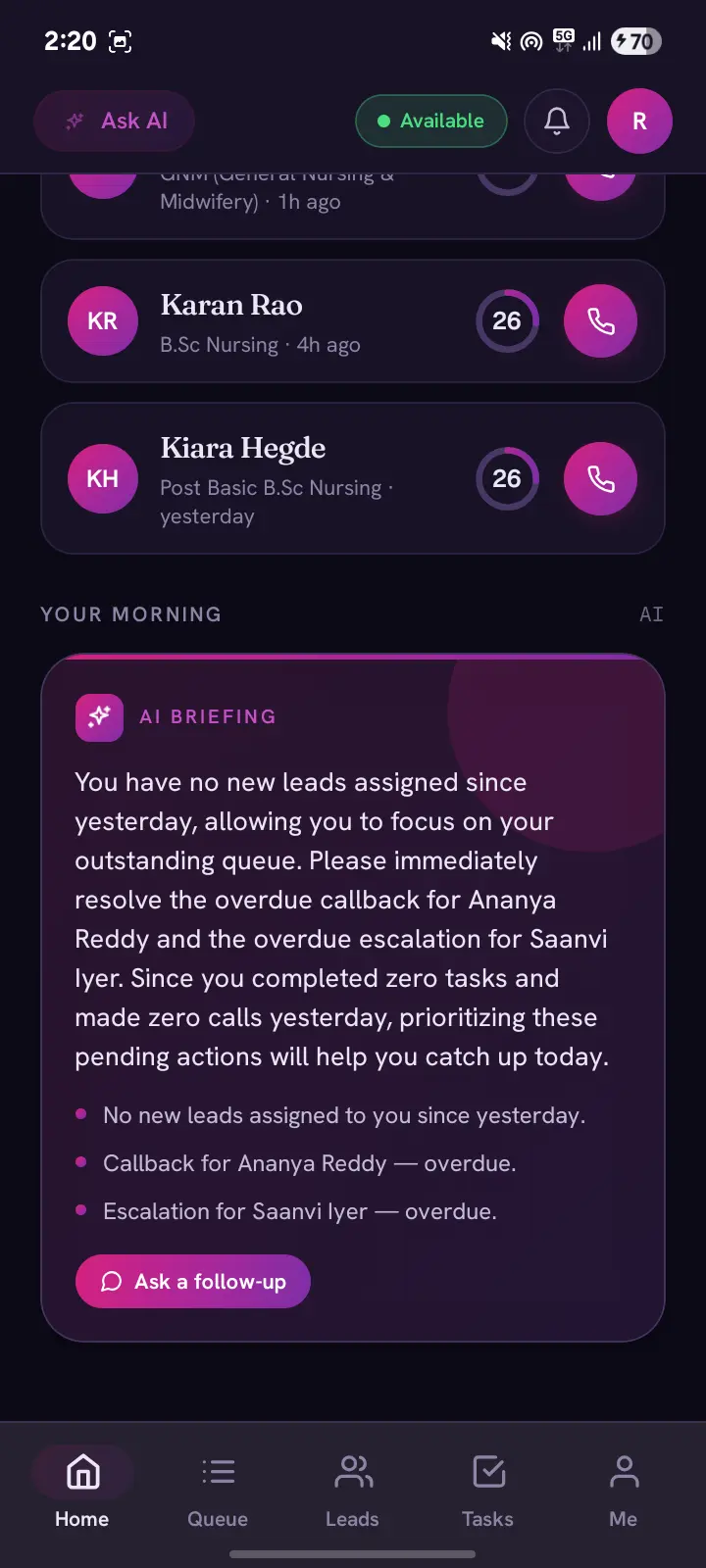
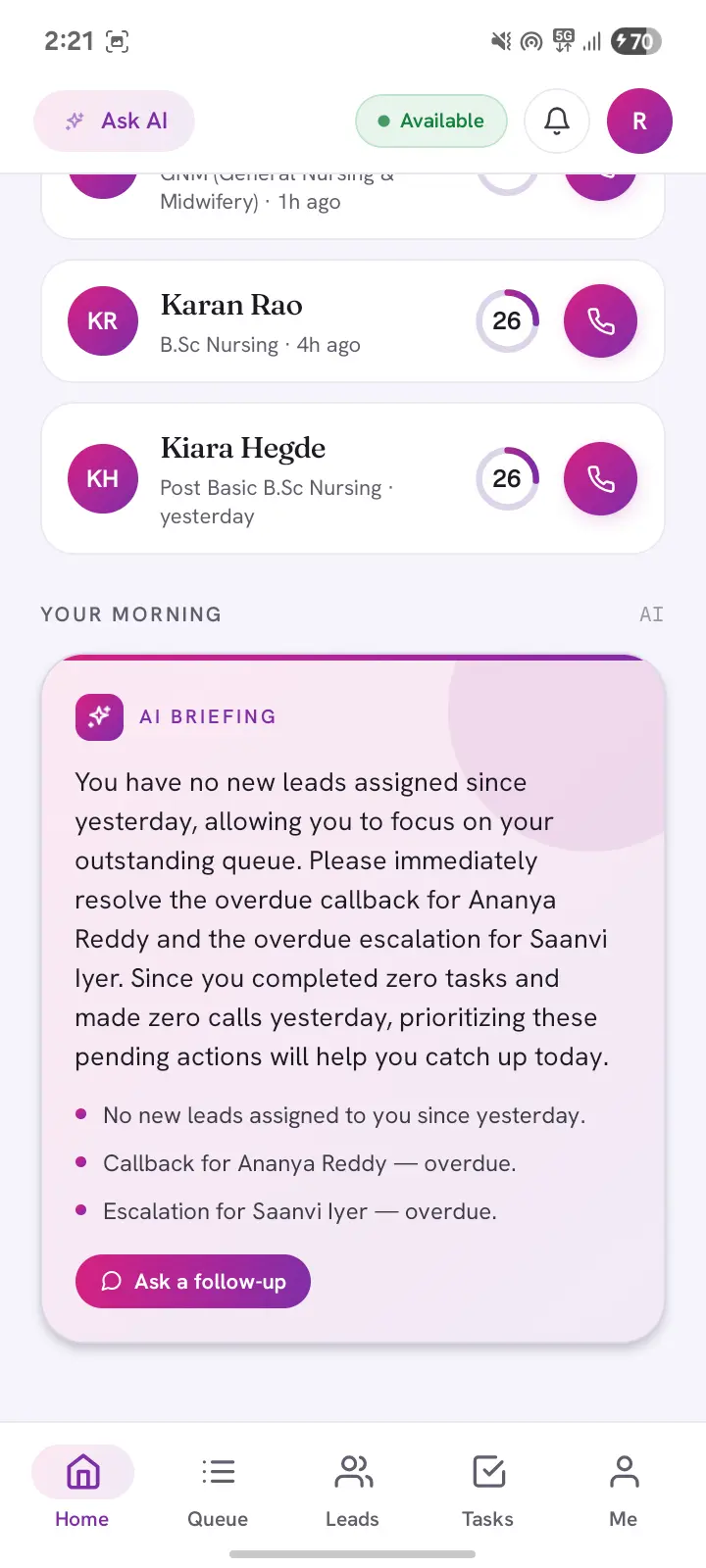
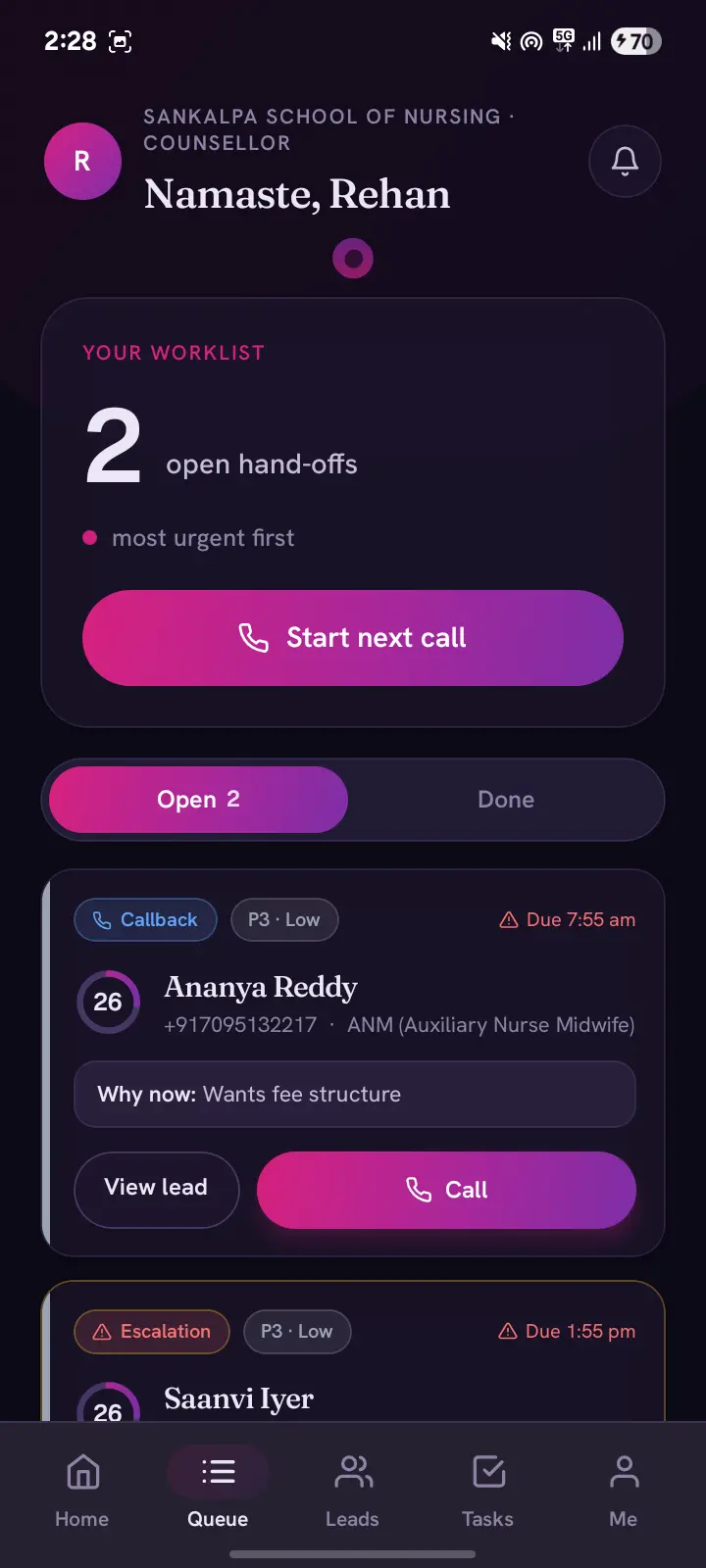
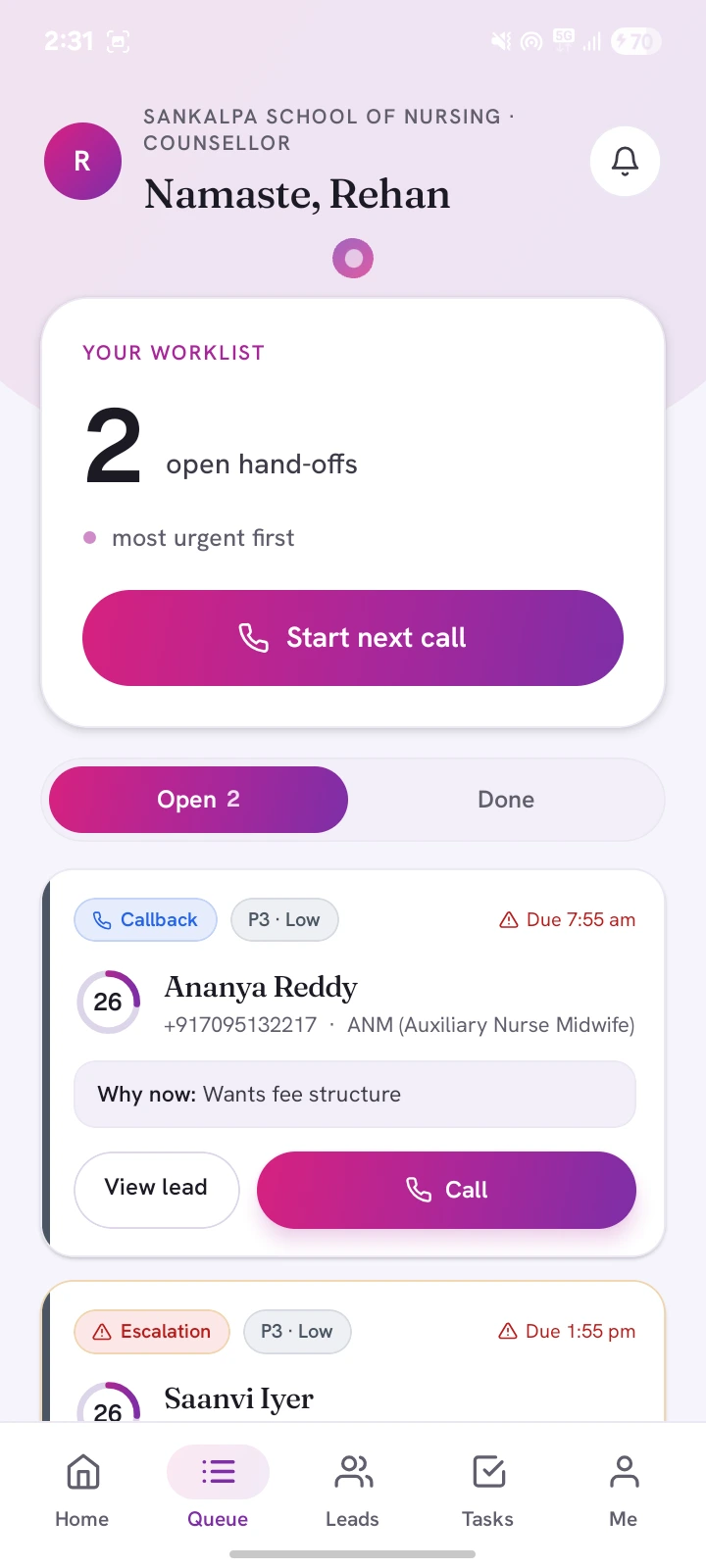
The counsellor's home screen isn't an empty inbox — it's a ranked plan. A serif “Good morning” sits over an AI briefing AVA wrote from last night's calls: who went hot, who's going cold, and what to do first. Below it, one glance gives the whole day — a hot-lead-waiting card, today's callbacks with the time and the reason, and the top score-ranked leads each with a one-tap call button.
An availability toggle (Available / Away) controls whether a returning lead's call rings this counsellor at all; an offline-sync chip shows pending changes the moment signal returns.
When AVA can't ground an answer, hits a binding request, or hears frustration, it doesn't drop the lead — it writes a Whisper brief and routes the task here. The Work tab has two faces: a shared Tasks pool the counsellor Claims (the card flashes a check, moves to “Mine”) then Completes with a logged outcome, and a Pipeline funnel that advances each lead through the admissions stages.
Crucially, every escalation carries AVA's plain-English reason for the hand-off — “Lead wanted a commitment we can't make — needs a human,” “An answer relied on out-of-date info — reconfirm,” “Lead sounded frustrated — handle personally.” The counsellor never opens a call blind. They open it already knowing why they're the one holding it.
“Lead wanted a commitment we can't make — needs a human.”
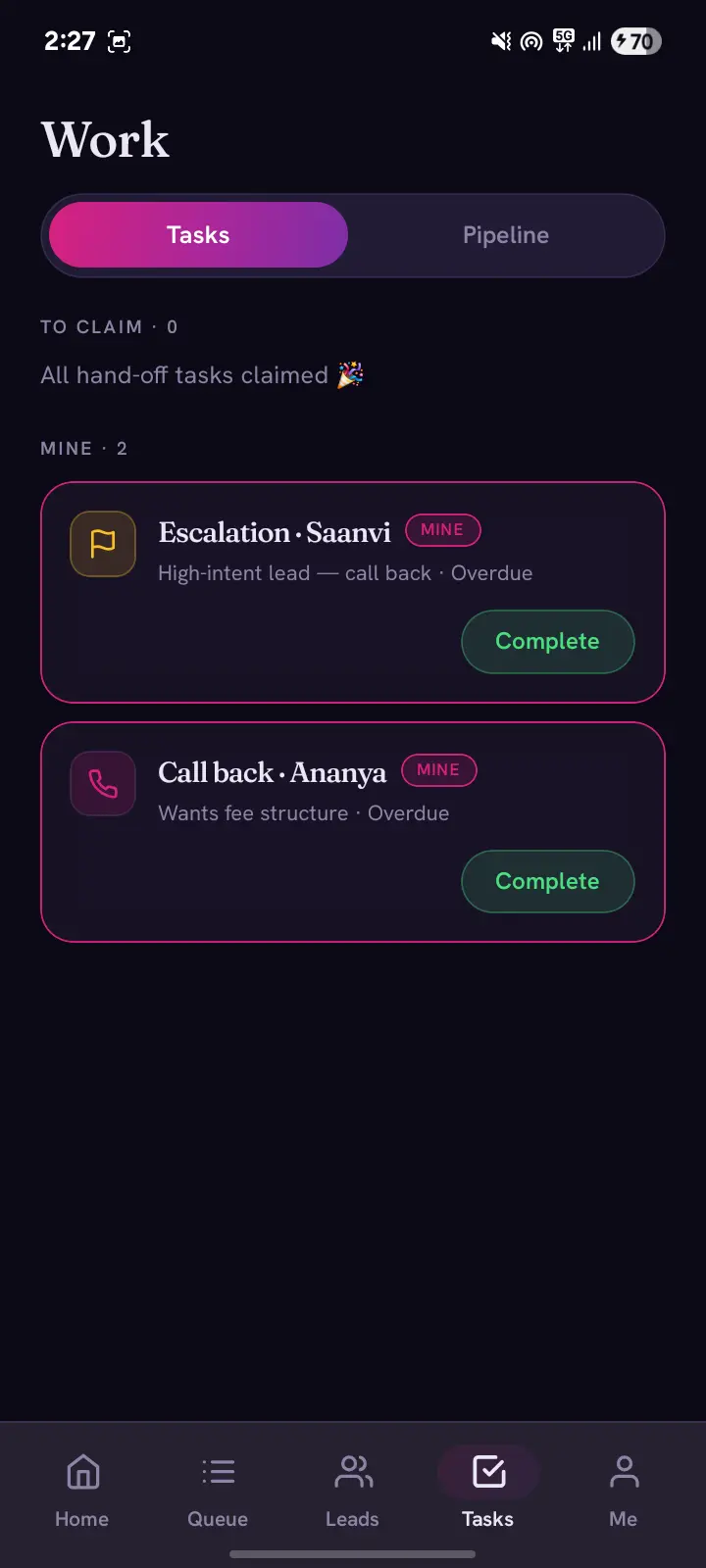
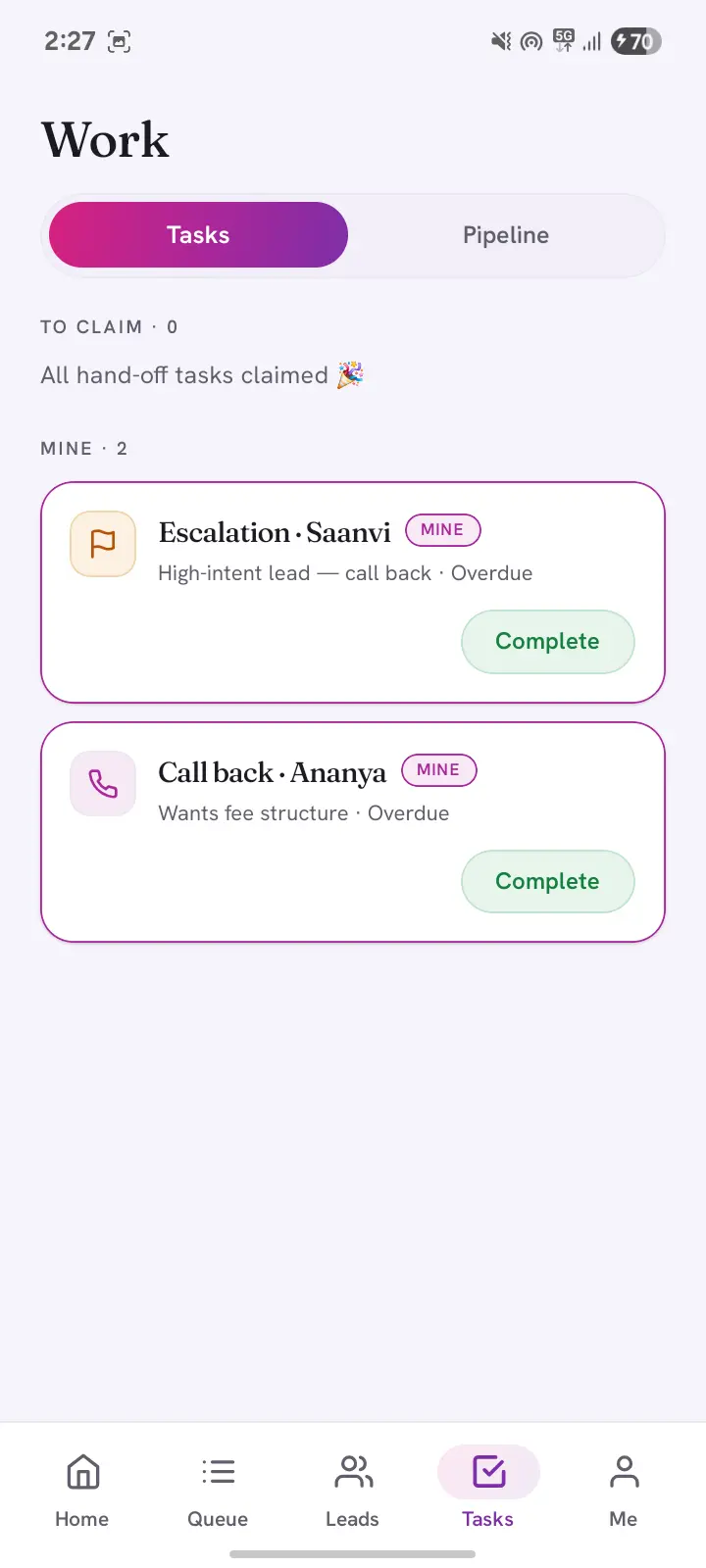
Each escalation card carries the amber Whisper-brief reason line — the “why” written before you tap in. Claim it, work it, close it with an outcome; the lead's status moves with the task.
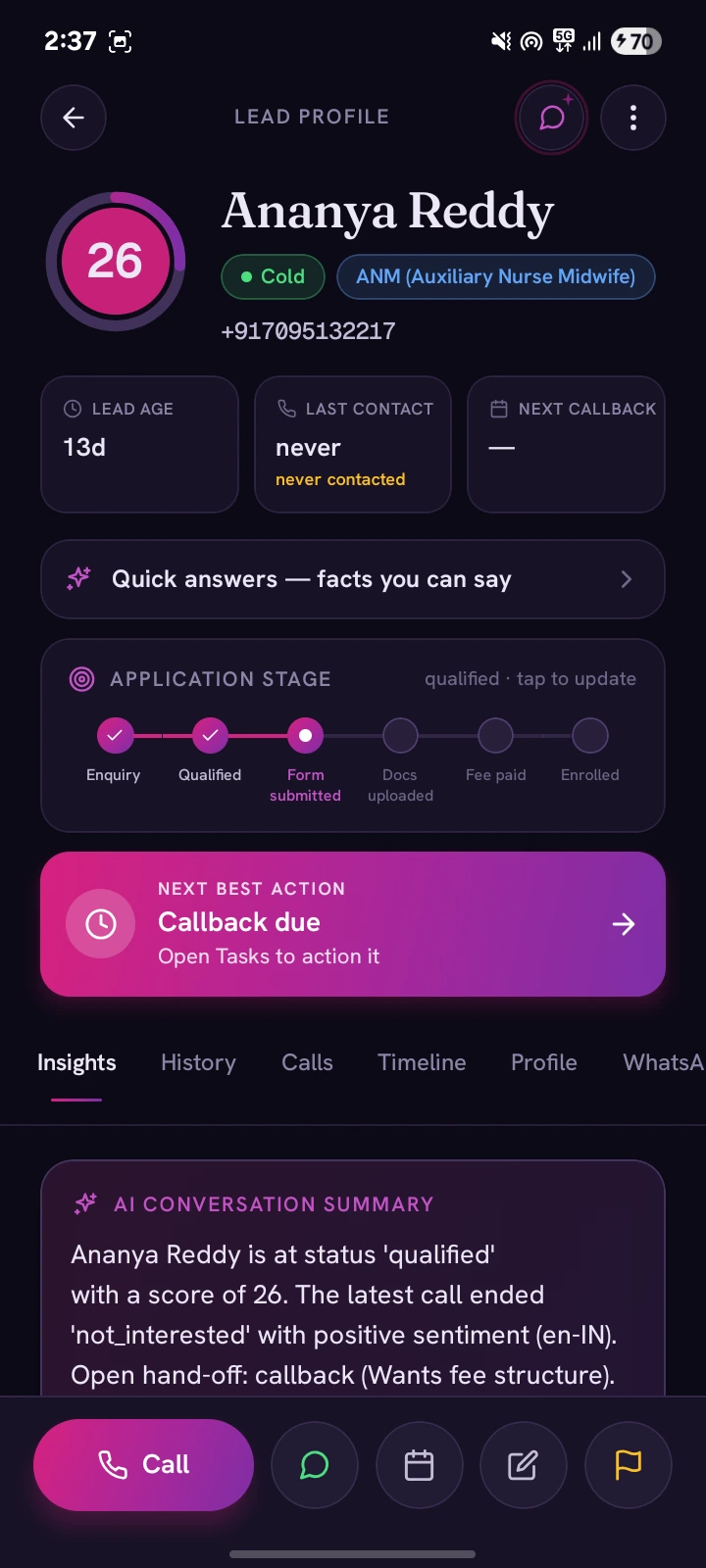
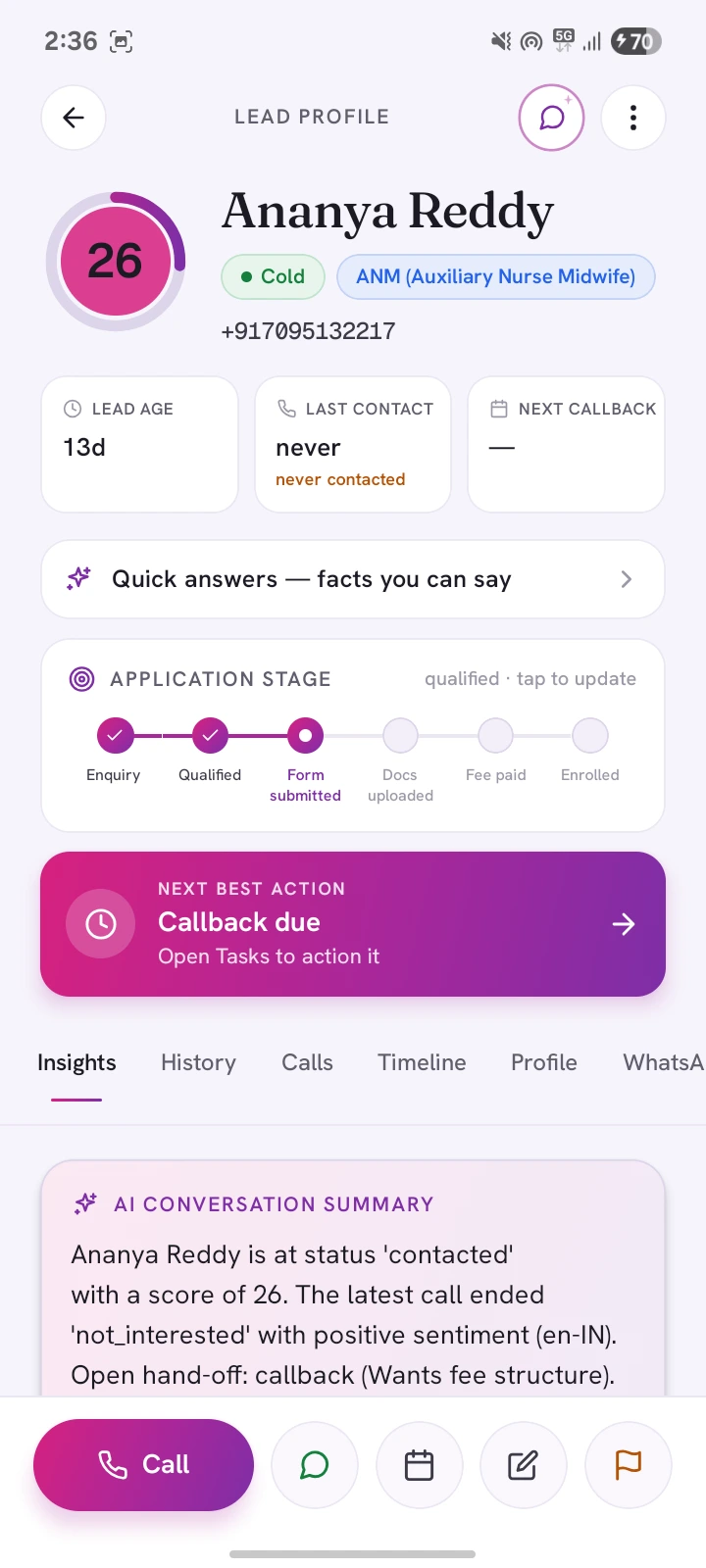
Tap any lead and the daily-driver screen opens: a score gauge that counts up with a breathing brand glow, banded Hot / Warm / Cold, and a snapshot strip — lead age, last contact (with a going-cold flag past seven days), next callback.
The Insights tab is AVA's read of every conversation: an AI summary, latest-call sentiment and language, intent signals, what this lead cares about, and a “Why this score” breakdown across Fit / Intent / Freshness. And at the bottom, the part that earns trust — the program's approved, in-date fees and scholarships, quoted verbatim with a renew by warning when a fact nears expiry. The counsellor quotes the exact same number AVA did, because it comes from the exact same approved fact.
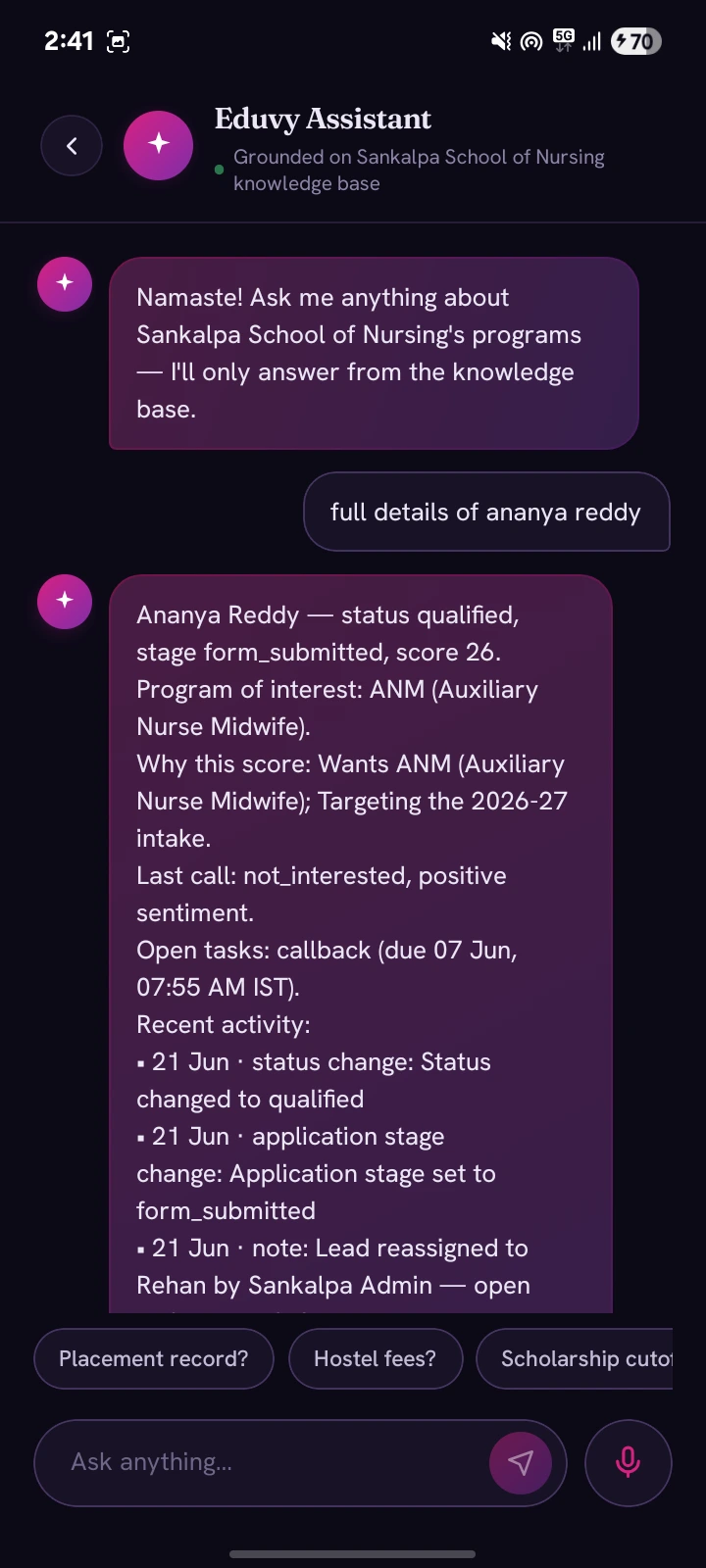
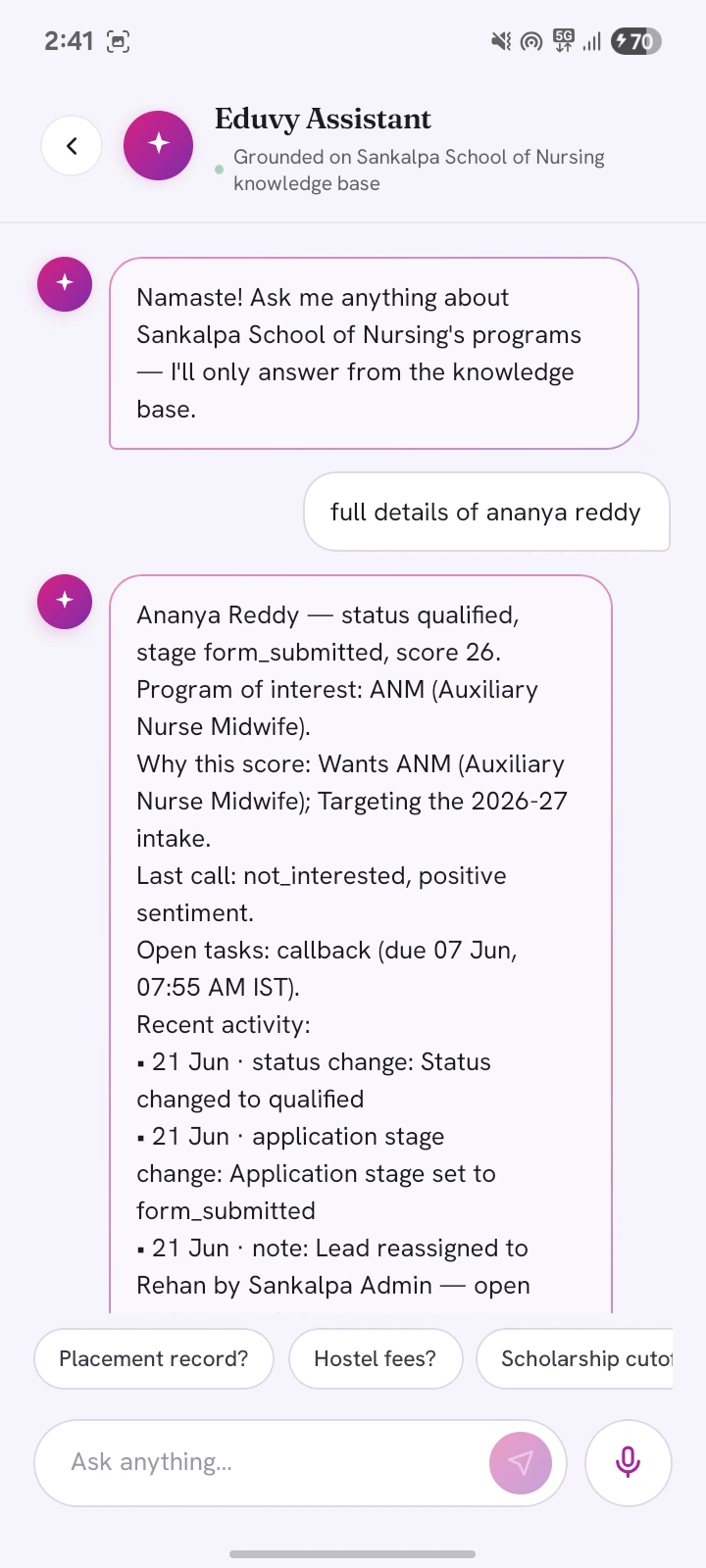
This is Home's grounded-call promise, told from the counsellor's side. Eduvy Assistant answers questions about the lead and the college's programs only from approved facts — its header carries a live “Grounded on {college} knowledge base” status. Ask the right thing and the answer comes back in a gradient-bordered bubble with a green chip. Ask something the knowledge base can't confirm — a management-quota price, an unapproved waiver — and it does the one thing a hallucinating assistant never would: it defers.
Same grounding contract as the voice agent. The counsellor gets answers they can repeat to a parent without a second thought.
A counsellor in an admissions office on a patchy 4G floor needs options, not one fragile path. Tap Call and AVA's app offers three illuminated routes — and picks what's usable for the signal you have. Both paid modes are auto-transcribed and auto-scored the moment the line drops — never recorded; only the consent announcement plays at the start.
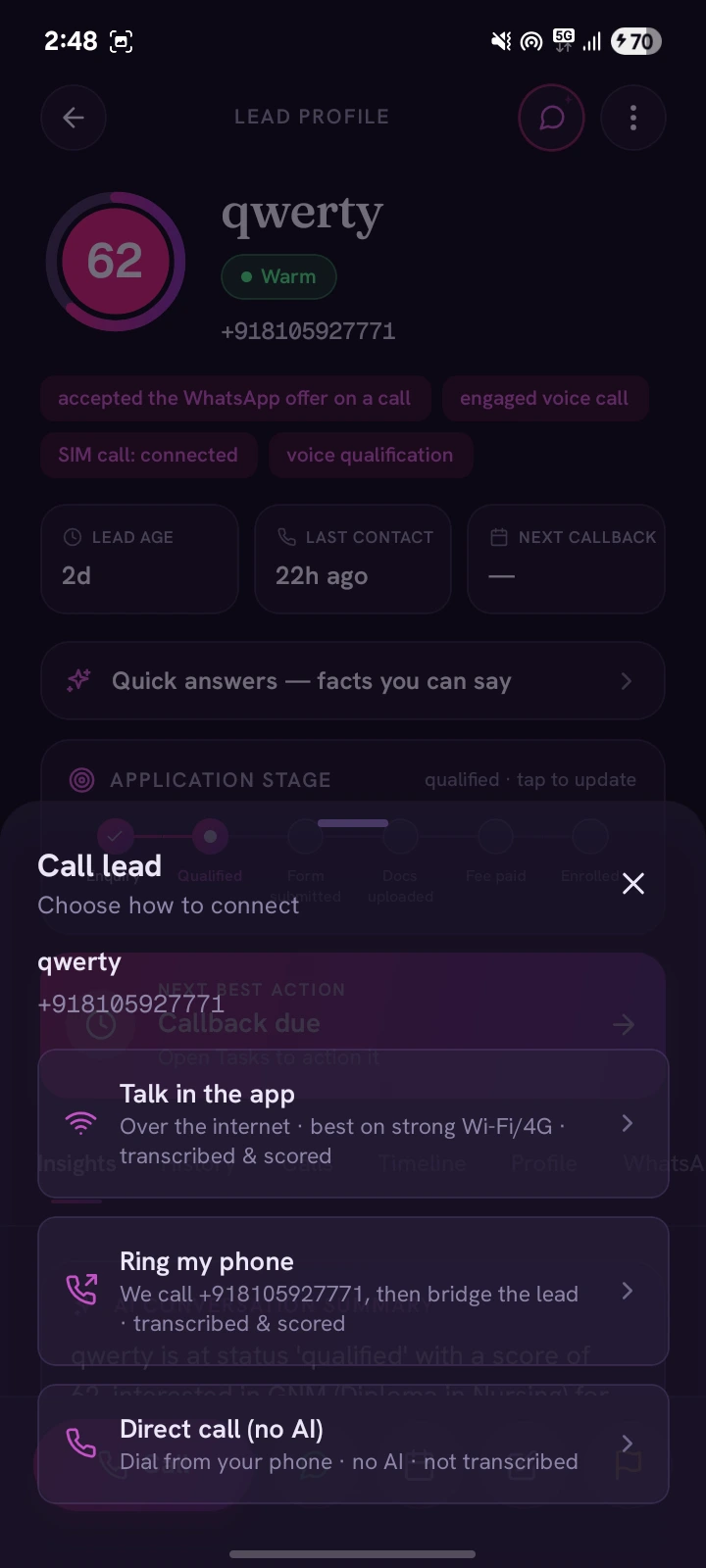
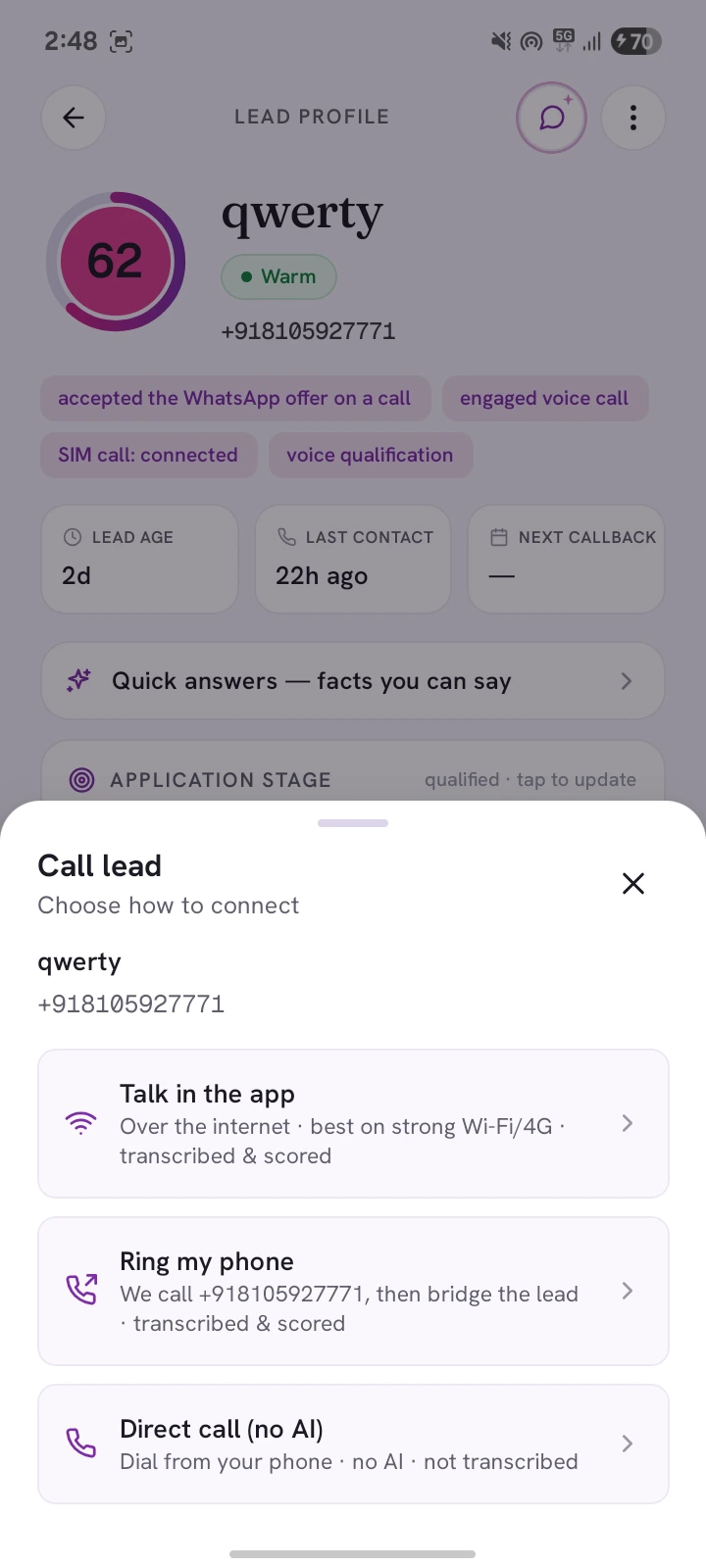
Both paid modes feed the same pipeline as AVA's own calls: transcript, sentiment, outcome and an updated score land on the lead the second the line drops. The human call becomes data, automatically.
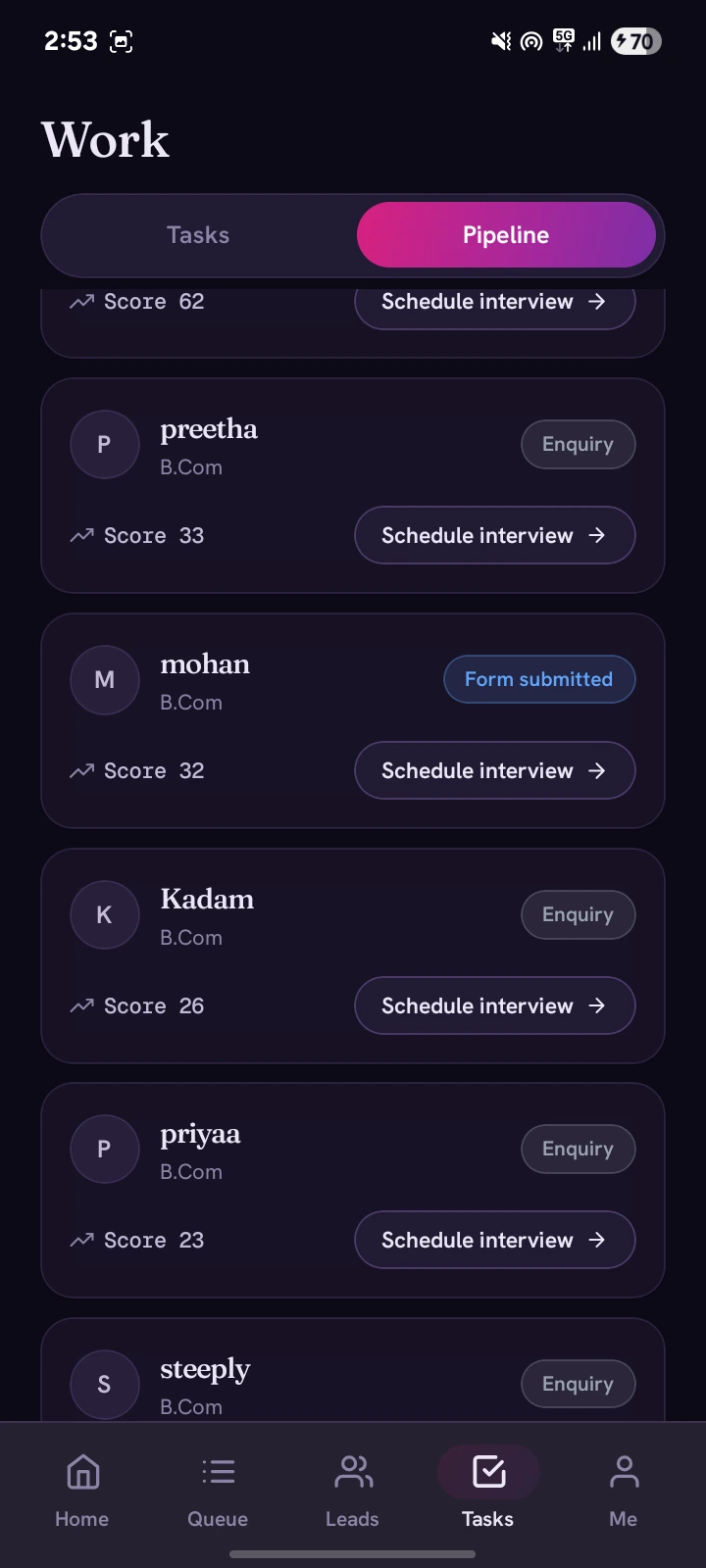
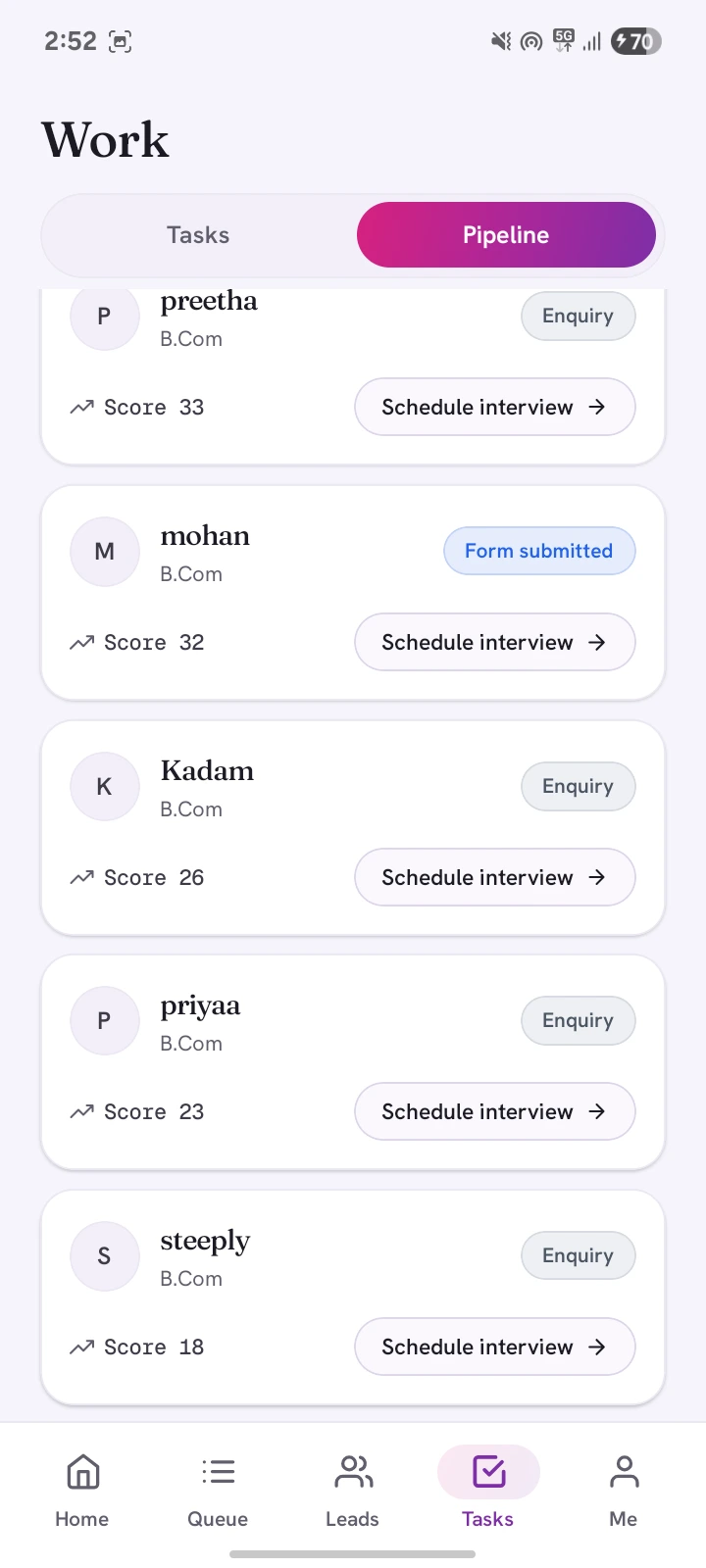
Closing is a sequence, and the app makes the next step obvious. The Pipeline view shows each of the counsellor's leads as a card on the six-stage admissions funnel — Enquiry → Qualified → Form submitted → Docs uploaded → Fee paid → Enrolled — with a single contextual action that always reads as the real next move: Schedule interview, then Send offer, then Mark enrolled.
Each action drives the interviews-and-offers subsystem and auto-promotes the lead's stage, so the funnel is never a manual lie — it reflects what actually happened. Tasks completed with a terminal outcome move the lead's status with them. No separate spreadsheet, no double entry.
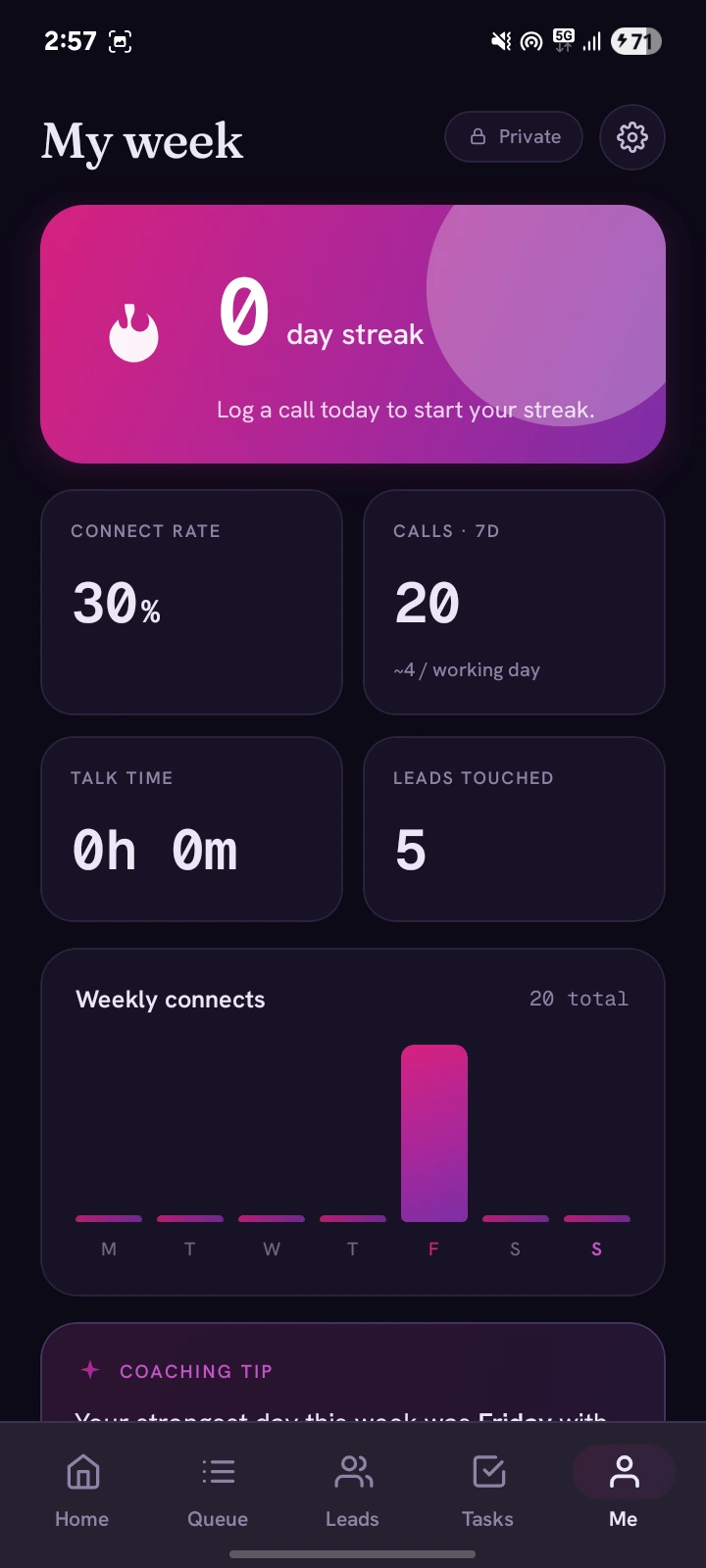
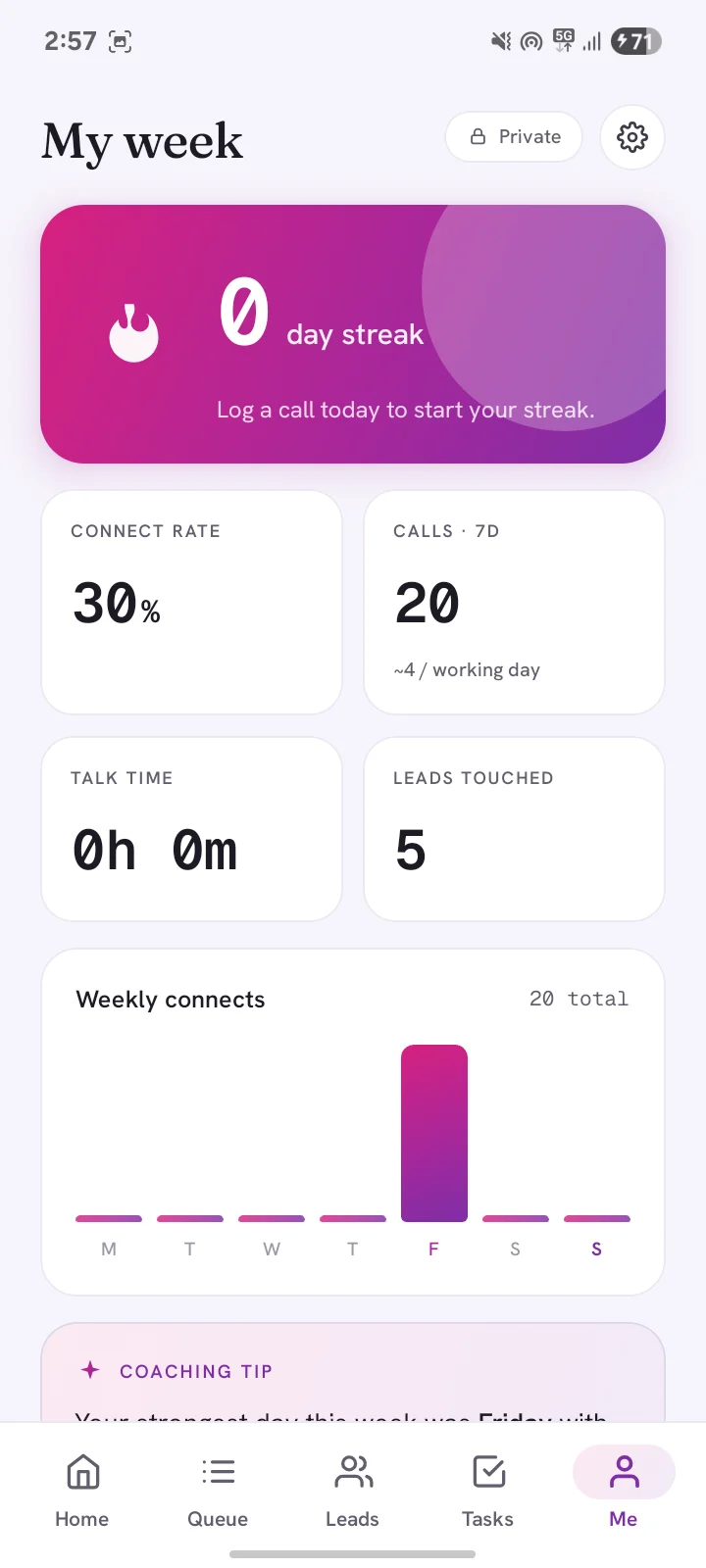
Counsellors burn out when their numbers become a public scoreboard. AVA's “My week” is deliberately the opposite — marked Private, no leaderboard, just you and your week. A gradient streak hero counts days-in-a-row with calls logged; a grid tracks connect rate, calls in the last 7 days, talk time, and leads touched, all in tabular Geist Mono; a weekly-connects bar chart highlights the best day.
And a Coaching tip turns the data into one honest, derived nudge — “Your strongest day this week was Thursday with 14 connects. Line up tomorrow's callbacks to match it.” Motivation by mirror, not by ranking.
days in a row with calls logged
connect rate
One agent that calls every lead in seconds and proves every word; one app that hands your team only the warm ones, brief already written. That's the whole loop — and it runs in nine Indian languages, on weak signal, the day you turn it on.